
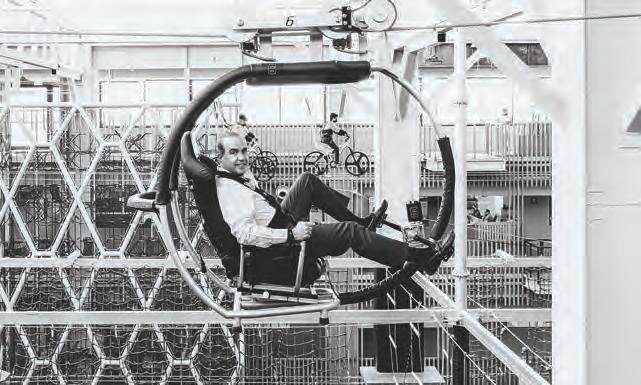
From a Child Magician's Dream to Building Worlds for Millions
Cairo: Djed – Ashraf Gaber
In the late 1990s، specifically in 1999، as the world transitioned toward a new millennium, Mexican entrepreneur Xavier López Ancona made an audacious decision: to construct complete cities designed exclusively for children, spaces where they would work, learn, and dream. He recognized a profound gap in the world: the absence of genuine entertainment and educational experiences tailored for the younger generation.
Within a quarter-century, his vision evolved from a personal aspiration into a global empire serving millions of children annually across 22 countries. This is the remarkable story of a man without children of his own, who nonetheless created magical worlds for children across the globe، a testament to vision transcending personal circumstance.
ORIGINS & THE CRUCIBLE OF EARLY LESSONS
Roots: A Foundation Forged Through Adversity

Xavier López Ancona entered the world on April 4, 1964, in Mexico City’s heart, born into a large family of seven children. His father, Isidro López Martínez, was an entrepreneur navigating ventures across food and real estate sectors, while his mother devoted herself to nurturing their large brood. In his formative years, Xavier’s ambitions transcended typical entrepreneurial aspirations، his dreams were literally magical. He aspired to become a magician, dedicating considerable time to performing enchanting shows at nursing homes and charitable shelters.
Yet life teaches harsh lessons early. In 1984, during his formative years, his father’s real estate enterprise collapsed in the San Juan Ixhuatepec district. Rather than succumb to despair, Xavier demonstrated genuine support، not through mere sympathy, but through decisive action. He entered the field and undertook a painful task: liquidating most family properties to minimize catastrophic losses. This early crucible became his first authentic entrepreneurship lesson: confronting crises with speed and effectiveness.
This formative hardship sculpted Xavier’s character fundamentally. He channeled adversity into academic excellence, earning a Bachelor’s degree in Business Administration from the prestigious Universidad Anáhuac in Mexico City. His educational trajectory continued unabated. He pursued advanced studies at IPADE (Instituto Panamericano de Alta Dirección de Empresas), then achieved an international milestone by attending Northwestern University’s Kellogg School of Management, where he earned his MBA in 1992.
At Kellogg, a transformative moment crystallized. Xavier studied under Philip Kotler, the marketing legend widely recognized as the founder of modern marketing science. Kotler’s instruction transcended typical academic lectures، it was pragmatic vision regarding market understanding, consumer psychology, and value creation innovation. These intellectual seeds would later flourish in Xavier’s greatest venture.
STRATEGIC ASCENT & VISION CRYSTALLIZATION
The Preparatory Years: Building Unshakeable Strategic Foundations

Following graduation, Xavier pursued opportunities at premier consulting firms. He spent formative years at Booz Allen & Hamilton, the globally renowned consulting powerhouse, where he acquired deep understanding of large-scale corporate operations and sophisticated strategic frameworks. Subsequently, he transitioned to General Electric Capital as an investment capital manager, serving two years as Vice President of Equities in Mexico. These experiences were essential، Xavier wasn’t merely incubating an idea; he was constructing solid intellectual foundations in investment, financing, and strategic operations.
In the mid-1990s, as the world prepared for the millennium transition, Xavier observed something crucial: Mexico, and indeed the world, lacked a genuinely meaningful recreational option for children. Classical theme parks existed but lacked serious educational integration. Schools provided learning but missed the entertaining elements making education tangible and real. Xavier recognized a significant market void.
This wasn’t theoretical، it was profoundly personal and practical. As a childless entrepreneur, Xavier invested time with his extended family’s children (16 nieces and nephews), orchestrating trips and activities. He observed their play patterns and their natural mimicry of adult life. He witnessed their innate desire to understand surrounding worlds, to imagine themselves in diverse roles. This simple yet profound observation became the true genesis for everything subsequently created.
IDEATION & THE FIRST GREAT CHALLENGE
The Birth of an Idea: From Observation to Audacious Ambition
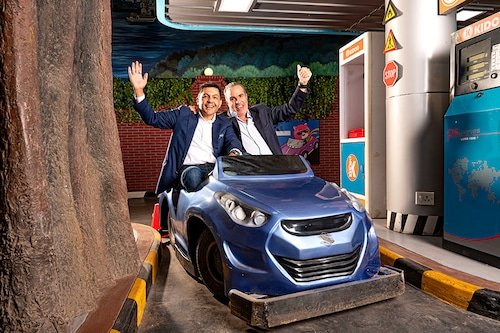
In 1997, Xavier began translating observations into concrete reality. Young entrepreneurs gathered around his vision, most notably his friend Luis Javier Laresgoiti. The concept was simple yet profoundly audacious: construct a miniaturized, complete city for children, mirroring the authenticity and detail of adult cities، yet designed smaller, safer, and fundamentally educational.
One colossal obstacle loomed: capital. In late-1990s Mexico, following the Asian financial crisis and economic turbulence, government support for entrepreneurial ventures was nonexistent. Xavier and his team invested every personal penny into the project, yet even this proved insufficient. They approached a friend and one of Xavier’s six brothers for additional investment, but even this was rapidly depleted.
Here Xavier demonstrated authentic marketing brilliance. Rather than surrendering to financial constraints, he pursued strategic partners who recognized his idea’s value. Major corporations were seeking innovative pathways to engage children and families, and the entertainment sector offered a unique platform. Xavier approached corporate giants with a compelling proposition: become integral to an authentic educational city and gain access to millions of children and families. This pivotal moment transformed a personal dream into viable business، 55% of initial investment originated from these corporate partnerships, a strategic masterstroke that converted financial scarcity into partnership opportunity.
GENESIS & REVOLUTIONARY PHILOSOPHY
KidZania’s Birth: September 1999، The Dream Materializes
In September 1999, the doors opened to Ciudad de los Niños، the Children’s City، in Santa Fe, Mexico City. This modern district, featuring contemporary commercial developments, provided strategic appropriateness for this pioneering venture.
Xavier’s first action was remarkable within the entertainment industry: he consulted 9,000 children regarding their ideal city’s design. Consider this profoundly، 9,000 children. Xavier didn’t presume children’s preferences; he asked directly. The result manifested as a miniaturized city featuring over 100 distinct professions and 82 establishments. Every detail received meticulous planning to reflect the adult world at child-appropriate scale.
Xavier introduced a fictional currency called “KidZos”، children earned this currency through work in various city professions, subsequently spending it in shops and activities. This transcended mere play; it was genuine economic education، the principle that earning precedes ownership.
Success arrived immediately and decisively. The city attracted hundreds of thousands of annual visitors. Initial projections anticipated 400,000 annual visitors, yet actual figures doubled in the first and second years. Shortly thereafter, it became Mexico’s premier entertainment destination.
The Revolutionary Philosophy: The Win-Win-Win Model
What genuinely distinguished Xavier extended beyond KidZania’s commercial success to the philosophy undergirding it. He described it as “Win-Win-Win”، a model where all participants benefit substantially.
Children win by accessing safe, entertaining, and genuinely educational environments. They learn how the real world functions, discover professions matching their interests, and understand work’s value, money’s significance, and personal responsibility.
Parents win by accessing secure spaces where children simultaneously learn and play, where they relax knowing their offspring remain in protected, educational environments.
Corporations win by obtaining unique opportunities to connect with children and families authentically and meaningfully. Rather than forced marketing, brand integration becomes organic، children work in actual McDonald’s establishments, not merely viewing advertisements.
Yet Xavier extended this philosophy further. He founded KidZania upon powerful social values. The true objective transcended mere profit، it was shaping a generation of responsible, enlightened citizens. KidZania’s motto، “Get Ready for a Better World”، wasn’t marketing rhetoric; it was a genuine commitment.
When Xavier later articulated KidZania’s core mission, he stated:
“KidZania was founded with profound desire to make tangible difference in children’s lives and ensure they become engaged, responsible citizens. We wanted to create safe spaces where children could develop values and qualities including creativity, autonomy, responsibility, and solidarity.”
EXPANSION, STRATEGY & WEALTH CREATION
Strategic Growth: Mastering Markets Before Global Expansion
By 2005, KidZania had expanded within Mexico to multiple cities، Mexico City, Monterrey, and Guadalajara. Xavier had internalized a crucial strategic lesson: master local market development before pursuing global expansion.
At this juncture, natural questions emerged: What constituted Xavier’s accumulated wealth? What initial capital funded the enterprise? The truth proves elegant: Xavier began without ready-made fortune. “We poured every personal penny we possessed into this project,” he later described that period. Yet even this proved insufficient. They approached a friend and one of Xavier’s six brothers for additional investment, but even this was rapidly exhausted. The late-1990s Mexican financial crisis meant government support and traditional financing remained unavailable.
Rather than surrender, Xavier transformed financial constraint into strategic advantage. He converted major corporations into investment partners. These corporations sought mechanisms to engage children and families; the entertainment sector provided unique platforms. More than 55% of initial capital originated from corporate partnerships, while Xavier, his partners, and family financed the remainder. This represented remarkable strategic transformation: instead of mere financial investment, he created corporations as genuine partners in his transformative vision.
The Bold Strategic Pivot: From Ownership to Franchise Model
Then in 2006, Xavier made a daring strategic decision. Rather than attempting to replicate proprietary ownership models everywhere (expensive and controlling), he transitioned toward a franchise model. He selected Tokyo as the first global expansion. Why Tokyo? Because Xavier understood that Tokyo establishes trends across Asia، success there would signal continental viability.
The bet proved correct. Tokyo became an immediate success, and KidZania spread across Asia rapidly، Seoul following Tokyo, then Jakarta, Dubai, Bangkok, Shanghai, Kuala Lumpur, Mumbai, Istanbul, and beyond.
Yet the model wasn’t simple replication. Xavier recognized that each market differs fundamentally. In Japan, KidZania added a university and even a preschool، because Japanese culture deeply values education. In the United Arab Emirates, content adapted to local culture and values. This customized approach made KidZania genuinely global, not merely an American-style international chain.
Financial Success and Personal Philosophy
Today, financial figures reflect substantial success. According to available data, KidZania generates combined revenue estimated at $120 million or more from direct operations and franchises, with continued growth expectations as 12 additional locations are in development. Regarding Xavier’s personal wealth, he chose maintaining complete privacy regarding exact figures, as Grupo KidZania, as a closed private company, doesn’t disclose financial data publicly. However, multiple journalistic and economic reports have ranked him among Mexico’s most successful entrepreneurs. What remains certain: Xavier never prioritized billionaire lists as much as his company’s impact on millions of children globally.
CONTINENTAL EXPANSION & AFRICAN IMPACT
The African Leap: KidZania Cairo and Africa’s Unique Story
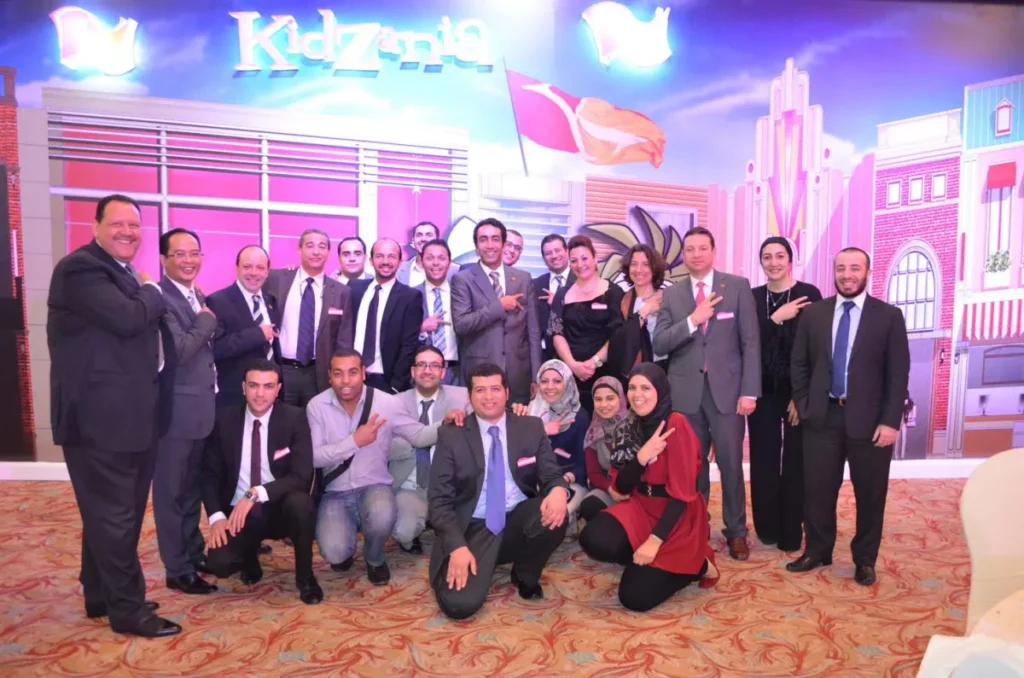
On September 16, 2013, a historic moment unfolded across the Arab and African worlds. That day, KidZania opened its doors for the first time in Africa، in Cairo, Egypt. KidZania Cairo became KidZania’s 15th global location, yet it was the first and only site across the entire African continent. This choice wasn’t random. Xavier and the company selected Egypt، a civilization spanning millennia of documented history، as KidZania’s gateway to Africa.
Xavier himself stated at the inauguration with both humility and pride:
“We remain humble and profoundly proud to bring KidZania to one of history’s oldest and most historically significant civilizations. Through opening KidZania Cairo, we bring a progressive experience grounded in role-playing that challenges and inspires Egyptian children to dream of their best possible futures and build superior worlds for themselves, their families, and global communities.”
KidZania Cairo emerged through a powerful strategic partnership with local expertise، Edrak for Edutainment Projects Development Co., led by Egyptian businessman Tarek Zidan, who became KidZania Cairo’s “Governor” in the company’s unique terminology. The partnership invested approximately $20 million in the initial project. KidZania Cairo is located in Cairo Festival City، a modern multi-use hub in New Cairo, just fifteen minutes from Cairo International Airport. The miniaturized city spans 8,400 square meters across two floors, featuring 82 establishments and 100+ different professions.
What truly distinguished KidZania Cairo was how deeply it adapted to Egyptian context. Beyond recognizable global brands like Coca-Cola, McDonald’s, and Cadbury, the partnership incorporated powerful local Egyptian brands: Al Ahram, Egypt’s most prestigious newspaper founded in 1875; Egyptian Food Bank; El Sewedy Electric; Chipsy (the famous Egyptian snack manufacturer); and Capital Broadcasting Center. This represented authentic Egyptian partnership, not merely global brand entry.
One of KidZania Cairo’s most inspiring aspects involved children learning at the Egyptian Food Bank within KidZania، collecting, packaging, and distributing food to families in need. This transcended role-play; it was genuine training in social work and community responsibility. Additionally, a Carpet Making Center and Renewable Energy Solutions Center connected children with Egyptian heritage and sustainable energy practices.
An especially innovative feature allowed children to convert earned KidZos (virtual currency) into actual Egyptian pounds, donatable to support orphans, schools, and hospitals. In Tarek Zidan’s words: “Money can build an additional classroom in a school.” This represented a unique social feature unseen across all KidZania locations similarly. Moreover, approximately 10% of anticipated annual child visitors were admitted free، “KidZania for All Kids,” as Zidan stated, “not exclusively for the wealthy.”
From day one, KidZania Cairo attracted thousands of children and families. Operating at full capacity, it received 1,200 visitors per shift. The company provided between 500 and 600 jobs for young Egyptians. Initial plans included expansion to Giza and Alexandria using identical models.
What distinguishes KidZania Cairo’s story is that it wasn’t merely copy-and-paste from Mexico or Tokyo. Egypt was a deliberate strategic choice. Xavier understood that the African continent، encompassing North, East, and South Africa، possessed enormous youth energy requiring empowerment and vision. Egypt was the gateway; Cairo was the seed. Today, twelve years post-opening, KidZania Cairo remains Africa’s sole location operating at full capacity, with updated expansion plans to South Africa and potentially other East African locations.
IMPACT, LEGACY & CONSCIOUS CAPITALISM
Quantitative Success and Profound Impact
By 2013, when KidZania opened in Cairo (the 15th global location), the numbers spoke eloquently. The company had attracted over 31 million children to its centers worldwide. By 2024-2025, it operated 29 locations across 22 countries, serving over 9 million annual visitors.
Yet the most compelling figures weren’t visitor statistics but measurable impact. KidZania conducted longitudinal studies on children who visited its centers years after their visits. The results proved remarkable:
- Children who visited KidZania demonstrated significantly stronger interest in how society functions
- Over 45% of children who visited aged 3-6 years remembered having increased interest in how society works, versus substantially lower percentages among non-visitors
- As they matured, they were considerably more likely to consciously and deliberately choose their career paths
- They internalized genuine lessons about earning money’s difficulty and money’s intrinsic value
Conscious Capitalism: Redefining Business Purpose
As KidZania grew, Xavier’s philosophy evolved substantially. During the 2010s and 2020s, the global movement toward “Conscious Capitalism” emerged، the concept that corporations can generate profit while pursuing purposes deeper than mere revenue.
Xavier pioneered this thinking. He contributed to a book titled “Mexican Companies: The Journey Toward Conscious Capitalism” and spoke publicly about rejecting the traditional business model:
“There exists an old idea that if you want to earn more money, you must pay employees less and charge customers more. This idea means society and environment absorb most costs. That isn’t business, in my view.”
Xavier believed corporations could transform faster than most imagined possible. He contended it required only 12-18 months to shift a company from traditional to conscious models، provided leadership committed to change and prioritized people’s wellbeing.
Challenges, Responsibility and Authentic Growth
Xavier’s journey wasn’t without challenges. Globally-expanded business models bring genuine complications. KidZania faced financial pressures during economically weak periods. Criticism arose regarding abundant corporate branding in child-oriented spaces، was this consumption or education?
Yet Xavier addressed these critiques transparently. He clarified that brands weren’t “forced advertising”، they were part of realistic modeling. Children would encounter brands throughout real life; why not experience them safely and educationally, understanding how actual corporations function?
What genuinely distinguished Xavier wasn’t the absence of failure or challenges, but rather how he addressed them. He repeatedly stated across multiple conversations:
“Our work’s key lies in continuous innovation and never surrendering to failure.”
LEGACY, VISION & GLOBAL TRANSFORMATION
Building an Empire: The Grupo KidZania Ecosystem
By 2024, Xavier López Ancona، the man who began dreaming of becoming a magician and became the leader of a global entertainment and education empire، had left an indelible mark across the world.
Grupo KidZania now encompasses three major brands: KidZania itself, plus Kinezis (redefining fitness and entertainment) and ACADEMI (focusing on academic education). Xavier expanded his vision to encompass complete family health and comprehensive wellness، transforming from entertainment into genuine holistic development.
Yet perhaps Xavier’s truest legacy isn’t measured in numbers، 29 locations, 9 million annual visitors, $120 million in annual revenue. The genuine legacy manifests in millions of children who left KidZania centers with deeper world understanding, stronger sense of personal possibility, and authentic desire to build better worlds.
Xavier’s words at KidZania Cairo’s inauguration in 2013 embodied this transcendent spirit:
“We remain humble and profoundly proud to bring KidZania to one of history’s oldest and most historically significant civilizations. By opening KidZania Cairo, we bring a progressive experience grounded in role-playing that challenges and inspires Egyptian children to dream of their best possible futures and build superior worlds for themselves, their families, and global neighbors.”
CONCLUSION: The Broader Lesson
From Observation to Global Revolution
Xavier López Ancona’s story transcends mere business success، though it certainly represents that. It’s the story of how simple observation of the world around you transforms into global vision. It’s how transparent confrontation with financial constraints، saying “I lack money, but possess a powerful idea”، leads to genuine innovation.
Most importantly, it’s a story about choosing purpose over mere profit. Xavier could have built a simple entertainment company. Instead, he chose to construct an educational enterprise. He chose to focus on children, on the future, on building demonstrably better worlds.
In a world where revenue and quick profits dominate business thought, Xavier López Ancona stands as a different entrepreneurship model، entrepreneurship that generates profit, certainly, but not at the cost of the fundamental mission: children and their futures.
The essential question Xavier answers with his entire life remains: Can business generate both profit and compassion simultaneously? Based on a quarter-century of KidZania’s existence, the answer is unquestionably, resoundingly yes.
Xavier López Ancona’s story reminds us that sometimes the simplest observations، children’s play and their deep need to understand surrounding worlds، can ignite global revolutions in how society approaches education, entertainment, and futures themselves.
This narrative celebrates a visionary entrepreneur who recognized that business’s highest purpose isn’t merely wealth accumulation, but wealth creation that simultaneously builds better human beings and better worlds.


